Muncie & Anderson, IN, Water Quality in 2026: What's in Your Tap Water Systems?
This article covers what Muncie and Anderson, IN, residents need to know about their tap water quality in 2026, including hardness levels, common contaminants, and how modern water systems can help. Residents across Madison County who rely on the Anderson Water Department may be surprised to learn that their water, while legally compliant, can still contain substances that exceed independent health guidelines.
Muncie and Anderson, IN, Tap Water Comes From a Complex Source
Anderson's municipal water supply draws from deep surface water supply wells tied to aquifers in the Indiana Creek in Lafayette Township and the White River and Killbuck Creek areas in Madison County. Because these sources sit beneath limestone and dolomite bedrock common throughout central Indiana, the water naturally picks up dissolved minerals and other compounds along the way.
Anderson Water Utility continuously monitors for contaminants according to federal and local regulations. For the latest quarter assessed by the U.S. EPA, tap water provided by this utility was in compliance with federal health-based drinking water standards. However, legal limits for contaminants in tap water have not been updated in almost 20 years, so a passing federal grade does not mean the water meets the latest independent health guidelines.
What Contaminants Are in Muncie and Anderson, Indiana, Water?
Several substances detected in Anderson's municipal supply go beyond simple minerals. Four contaminants, arsenic, chromium-6, nitrates, and total trihalomethanes (TTHMs), may surpass levels that independent health organizations warn against for long-term consumption.
Arsenic is a potent carcinogen and naturally occurring element in Indiana's geological formations that may be associated with increased health risks over time.
Chromium-6 (Hexavalent Chromium) may exceed health guidelines despite being below federal limits. Indiana's industrial history may contribute to regional chromium-6 contamination through manufacturing residue in groundwater.
Total Trihalomethanes (TTHMs) form when disinfectants like chlorine react with naturally occurring organic matter in source water. Local water can contain medium-to-high levels of total dissolved solids and added chlorine, which may produce an unpleasant taste and odor.
Volatile Organic Compounds (VOCs). Anderson has a documented history with groundwater VOC contamination. The Broadway Street Corridor Groundwater Contamination plume contains chlorinated VOCs detected above safe drinking water levels. The EPA has been collecting surface water and sediment samples in Killbuck Creek and the White River to assess impacts to nearby waterways.
PFAS ("Forever Chemicals"). Anderson's water system collected samples under the U.S. EPA Unregulated Contaminant Monitoring Rule. PFAS are long-lasting chemicals that break down very slowly and can be found in water, air, soil, fish, and human blood. This monitoring is being conducted so the EPA can determine what additional compounds may need to be regulated.
Anderson's Water Is Extremely Hard
Hard water is one of the most immediately noticeable water quality issues for Anderson homeowners. Anderson's water hardness measures approximately 22.1 grains per gallon, classified as "extremely hard" and among the hardest in Indiana, where the state average hovers around 15 GPG.
This extreme hardness stems from Anderson's location above limestone and dolomite bedrock, where groundwater slowly dissolves calcium and magnesium over thousands of years. The practical effects show up quickly: scale buildup on fixtures and appliances, spotty dishes and glassware, reduced water heater efficiency, and dry skin and hair after bathing.
What Treatment Options Address These Issues?
Different contaminants call for different solutions, and water systems in Muncie and Anderson, IN, can be tailored to each household's specific concerns.
Water softeners target hardness by exchanging calcium and magnesium ions with sodium and can also reduce iron and chlorine throughout the home.
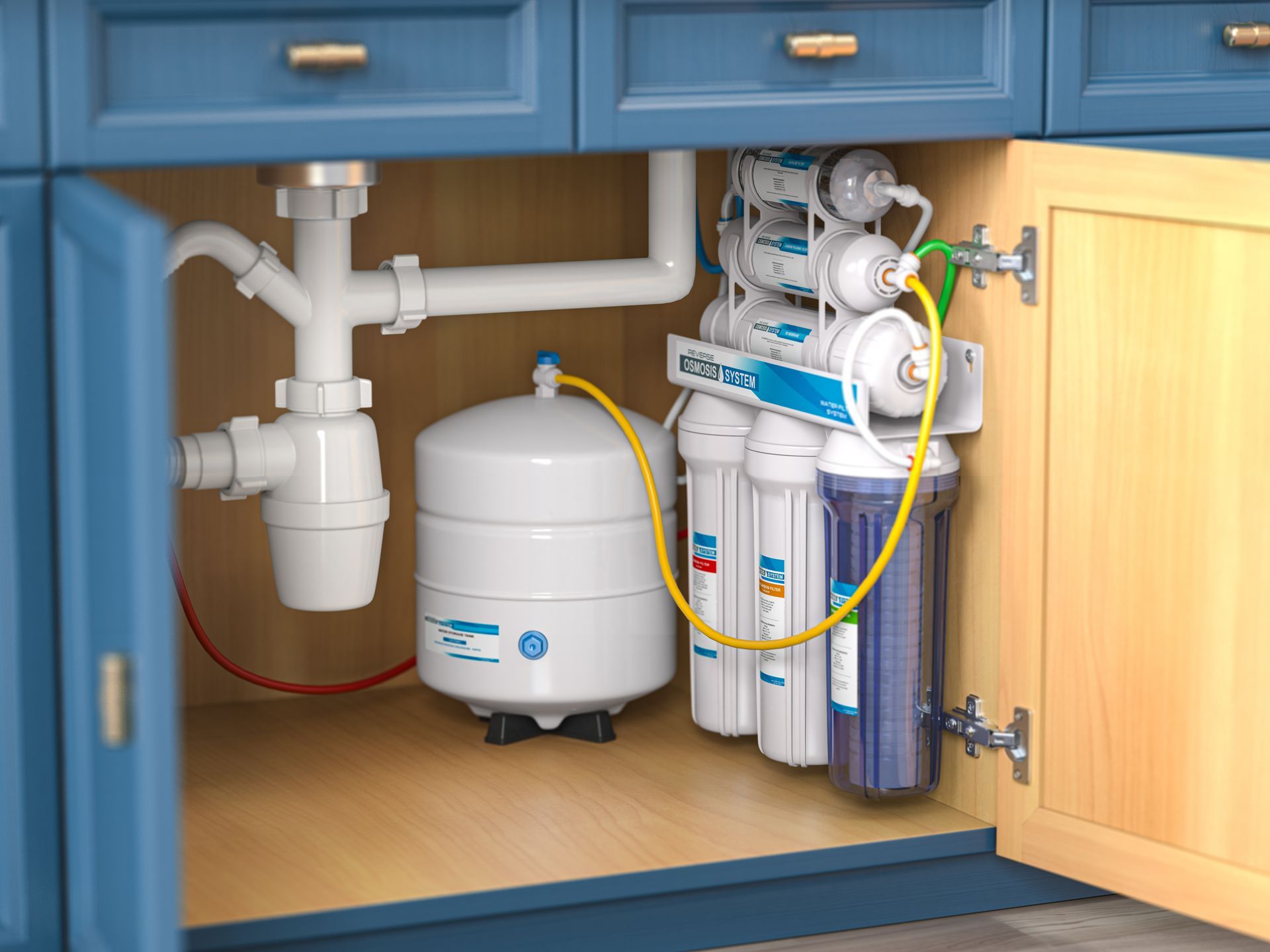
Reverse osmosis (RO) systems are among the most effective options for reducing arsenic, chromium-6, nitrates, and TTHMs at the point of use, delivering treated water directly at the tap.
Activated carbon filtration reduces VOCs and chlorine byproducts, and improves taste and odor throughout the home.
Specialty filters may address specific contaminants identified in a professional water analysis.
Regulated public water systems have until 2027 to complete initial PFAS monitoring. Until that process plays out at the municipal level, point-of-use filtration at home can offer an additional layer of protection.
Should Muncie and Anderson Residents Be Concerned About Their Tap Water?
Staying informed is worthwhile. The Anderson Water Department serves residents daily with water that meets EPA legal requirements, but independent health guidelines suggest stricter thresholds based on current scientific research. The gap between what is "legal" and what researchers consider ideal means households with young children or immunocompromised individuals may benefit from added treatment. A professional water analysis is the most reliable way to understand what is actually coming out of your taps before choosing a solution.
Take the Next Step for Your Household's Water Quality
Muncie and Anderson, IN, residents have real, addressable water quality concerns in 2026. Extremely hard water, arsenic and chromium-6 above health guidelines, ongoing PFAS monitoring, and documented VOC contamination in local groundwater all make understanding your home's water quality more than a passing interest.
Serving Muncie and Anderson, IN, and the surrounding Delaware and Madison County area, Oxley Softwater Co. offers free water analysis and a full range of treatment options including water softeners, drinking water systems, and specialty filters tailored to East Central Indiana's unique water challenges. Call (765) 289-6972 to schedule your free water analysis, or contact the team online to request a quote. You can also find and review Oxley Softwater Co. on Google to see what your Muncie and Anderson neighbors have experienced.